

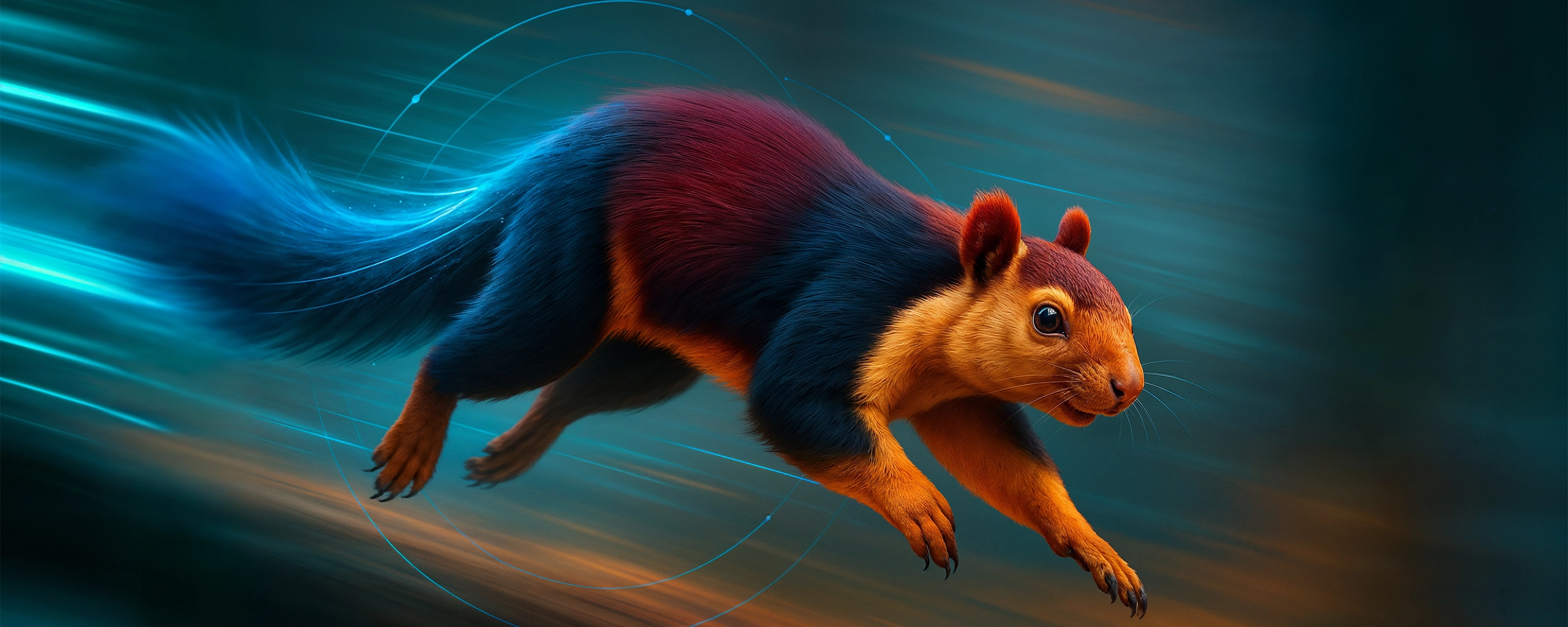
Beyond masterpieces – where excellence becomes art.
The Ratufa squirrel, or giant squirrel, can leap up to 6 meters (20 feet) between trees in a single bound—thanks to its powerful hind legs and lightweight body. These agile creatures reach speeds of 32 km/h (20 mph) on the ground, making them one of the fastest tree-dwelling mammals in the forest!Anti-Bloat Hardware / Firmware Modernization Service
The Problem: Overkill Embedded Linux / Android in Everyday Devices
Many modern appliances: smart kettles, blenders, coffee machines, and industrial controllers — unnecessarily run heavyweight OS just to display simple graphics or handle basic logic.
Why Linux / Android is Often Wrong for "Smart" Devices?
A "smart" meat grinder with a 7-inch touchscreen might run Linux just to render a basic menu. But:
Linux needs → 1GHz Cortex-A7, 512MB RAM, 4GB eMMC, ~3W power
Our MCU solution → 480MHz STM32H7, 128KB RAM, 1MB Flash, ~0.5W power
Result:
Boots in 0.2s (vs. 15s on Linux)
50% cheaper BOM
Smoother UI
The Hidden Agenda: How Heavyweight OS Inflate Costs and Hurt Performance
In some cases, dishonest contractors and suppliers deliberately opt for heavyweight operating systems like Linux or Android — not because the device needs them, but to artificially increase development costs and bill of materials (BOM).
Why does this happen?
Easier (but costlier) development: Finding an experienced embedded MCU programmer can be challenging and time-consuming. In contrast, Linux/Android developers are far more abundant, allowing vendors to cut corners in optimization—at the expense of performance and efficiency.
Inflated hardware requirements: Overpowered chips and extra memory justify higher component costs, padding profit margins while delivering no real benefit to the end user.
Slow, bloated devices: The result? Products that boot sluggishly, drain more power, and cost significantly more—all for a simple interface or basic logic that could run flawlessly on a microcontroller.
The Alternative?
By choosing the right MCU-based solution, we can help manufacturers to:
- Reduce BOM costs by 50% or more
- Cut boot times from seconds to milliseconds
- Slash power consumption
- Deliver smoother, more responsive UIs
The truth is simple: most "smart" devices don’t need an OS — they need efficient engineering. The industry must stop treating embedded Linux and Android as default choices and start prioritizing optimized solutions.
Our Expertise / What We Offer
Our Solution: Right-Sizing Your Device and Firmware
- Slow boot times (10-30 seconds for a tea kettle? Really?)
- High BOM cost (expensive SoCs, extra RAM/Flash)
- Complexity & security risks (unmaintained kernel, bloatware)
- Excessive power consumption (Linux needs more resources than the task requires)
Sometimes, it's too many reasons for DOWNGRADE
We replace Embedded Linux with a real-time OS (FreeRTOS, Zephyr, bare-metal) where possible, using modern microcontrollers (STM32H7, RA6M, GD32, ESP32) that offer:
- Instant boot (milliseconds, not seconds)
- Lower cost (cheaper MCU, less external memory)
- Better graphics (hardware-accelerated UI on MCUs, up to 1024x768+)
- Reduced power (no wasted CPU cycles on OS overhead)
Way to elegance solution
- Embedded Slimdown (акцент на уменьшении сложности и "похудении" системы)
- Bloatware-to-Baremetal (переход от "раздутого" софта к "голому" железу)
- LeanCore Optimization (оптимизация под "лёгкое" ядро, без избыточности)
- Efficiency Reboot (перезагрузка системы в сторону эффективности)
- RightSize Embedded (подбор правильного, а не избыточного решения)
- PowerTrim (уменьшение энергопотребления и сложности)
- Anti-Bloat Modernization (борьба с "раздутостью" в прошивках)
- Corruption-Cut Optimization (удаление избыточности, навязанной недобросовестными подрядчиками)